

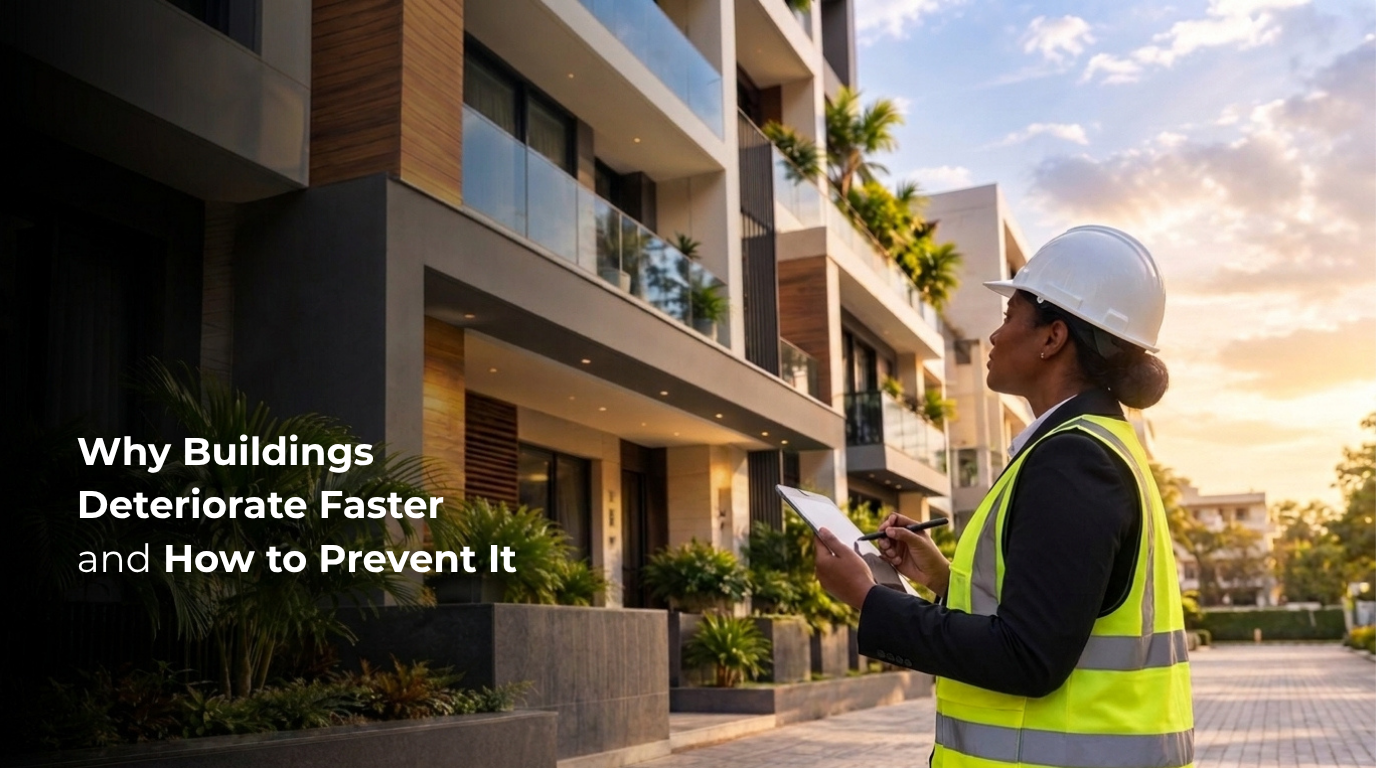
Most buildings tend to deteriorate faster than expected because of the poor maintenance culture, infrastructural deficits and high cost maintenance. Buildings are designed to last for decades, sometimes generations. Yet, many property owners begin to notice cracks, leaks, and system failures far earlier than expected. What should be a long-term asset slowly turns into a cycle of constant repairs and rising costs.
The truth is, premature deterioration is rarely accidental. It is often the result of overlooked factors that, when left unaddressed, compound over time.
Understanding these causes is the first step toward protecting your investment and ensuring your property retains both its value and functionality.
1. Lack of Preventive Maintenance
One of the most common reasons buildings deteriorate quickly is the absence of a structured maintenance plan. I can remember when growing up with my other siblings, each person has their task assigned weekly, for me i am to
Most property owners rely on reactive maintenance fixing problems only when they become visible. By then, the damage is often more extensive and costly.
How to fix it:
- Implement a preventive maintenance schedule
- Conduct routine inspections of plumbing, electrical systems, and structural elements
- Engage a professional facility management team to monitor building health
Small, consistent maintenance actions can prevent major structural failures.
2. Poor Facility Management
Even well-constructed buildings can swiftly deteriorate, without enough supervision. Coordinating maintenance, guaranteeing operating effectiveness, and maintaining asset value are all part of facility management, which goes beyond simple cleaning.
How to fix it:
- Join forces with a seasoned facility management firm
- Clearly define response systems and maintenance procedures.
- Regularly report on the performance of the building.
The gap between long-term sustainability and construction quality is filled by efficient facility management.
3. Overuse and Poor Occupant Behavior
Buildings are designed with specific usage capacities. When these limits are exceeded or when occupants misuse facilities, wear and tear accelerates.
How to fix it:
Upgrade systems where demand consistently exceeds capacity
Educate occupants on proper facility usage
Enforce usage guidelines and building policies
With the right facility management partner, your property can continue to perform at its best long after construction is complete. APIC Managers provides expert facility and technical management services designed to ensure safety, efficiency, functionality and long-term value.
Educate occupants on proper facility usage
Enforce usage guidelines and building policies
Build with purpose. Manage with expertise. Secure the future of your property with APIC Managers.